
MY Car Reviews evaluates vehicles using research, reliability data, ownership information, specifications, model-year differences and hands-on testing when available. Our goal is to focus on the factors that matter most to real buyers and owners.
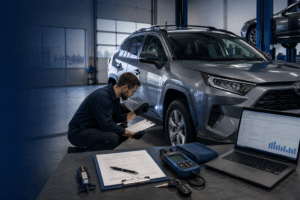
Our Approach
We aim to distinguish between research-based analysis and direct hands-on testing. Not every article represents a road test. When a review is based primarily on published data, reliability research, specifications or ownership information, we do not intend to present that work as first-hand driving experience.
What We Look At
Our evaluations consider multiple ownership and driving factors rather than relying on a single score or specification.
Reliability
Known problems, durability trends, engine and transmission history, recalls and model-year differences.
Ownership Costs
Maintenance, repairs, fuel economy, tires, insurance, depreciation and expected long-term costs.
Practicality
Passenger space, cargo room, controls, comfort, visibility and everyday usability.
Overall Value
Price, equipment, resale value, reliability and how the vehicle compares with realistic alternatives.
How We Build a Vehicle Evaluation
1. Identify the Exact Vehicle
We aim to separate generations, model years, engines, transmissions and trims where those differences materially affect reliability, performance or ownership.
2. Review Technical Information
We may review manufacturer specifications, owner manuals, service information, recall databases and other relevant technical sources.
3. Research Reliability & Ownership
Reliability-focused articles may consider independent dependability studies, repair-cost information, owner-reported issues, longevity data and known model-year problems.
4. Compare Real Alternatives
We compare vehicles against realistic competitors in the same price range, body style or use case rather than judging them in isolation.
5. Form the Recommendation
Our conclusions consider both strengths and trade-offs. A vehicle may perform well in one area while being a weaker choice in another.
When Direct Vehicle Testing Is Available
When MY Car Reviews has access to a vehicle for direct evaluation, we focus on real-world usability rather than specifications alone.
Driving Experience
Acceleration, braking, steering, ride quality, transmission behavior and highway performance.
Comfort & Interior
Seating, ergonomics, visibility, noise levels, controls and infotainment usability.
Practical Use
Cargo space, storage, passenger access, parking ease and everyday functionality.
Fuel & Efficiency
Real-world fuel economy or energy use when testing conditions allow meaningful observations.
Safety & Technology
Driver-assistance behavior, visibility, interface usability and available safety equipment.
Overall Value
Whether the vehicle’s price, equipment and ownership experience make sense compared with alternatives.
When We Have Not Personally Tested the Vehicle
We Make the Distinction Clear
Research-based content may still provide useful analysis, but we do not intend to imply first-hand testing where no direct vehicle evaluation occurred.
What Research Can Evaluate Well
- Reliability history
- Common problems
- Model-year differences
- Specifications
- Ownership costs
- Recall and service information
- Resale and long-term value
What Requires More Caution
Subjective areas such as steering feel, ride comfort, cabin noise and seat comfort are better evaluated through direct testing. When we rely on external testing for those areas, we aim to identify that context.
How We Assess Long-Term Dependability
Model Year Matters
We aim to evaluate reliability by specific generation, engine, transmission and model year rather than relying solely on a manufacturer’s overall reputation.
Known Problems & Recalls
We consider documented recalls, technical service information, recurring owner-reported issues and known component weaknesses where relevant.
High-Mileage Evidence
Where credible longevity information exists, we consider how frequently a vehicle or powertrain reaches high mileage and what major repairs typically appear with age.
Maintenance History
Even highly reliable vehicles can become poor purchases when maintenance has been neglected. Our used-car guidance therefore treats service history and condition as important parts of reliability.
What Matters When We Recommend a Used Vehicle
Reliability History
Proven durability and known issues for the exact model year.
Repair Exposure
The likelihood and potential cost of major repairs as the vehicle ages.
Maintenance
Required service, maintenance intervals and the importance of documented service history.
Resale Value
How well the model retains value and whether its used price makes sense.
Parts & Service
Availability of replacement parts and access to qualified repair facilities.
Condition
Mileage alone is not enough; condition and maintenance history are central to any used-car decision.
Information We May Use
Source Types
- Manufacturer specifications and documentation
- Government recall and safety databases
- Technical service information
- Independent reliability studies
- Repair and maintenance cost data
- Vehicle longevity research
- Reputable automotive testing publications
- Owner-reported information when appropriately contextualized
We aim to compare multiple relevant data points and give greater weight to information that is specific, documented and applicable to the exact vehicle being discussed.
Our Methodology Is Not Static
New Information
Vehicle reliability and ownership information changes as new recalls, model years, repair trends and long-term data become available.
Corrections
If we confirm a material factual error, we aim to correct it as soon as reasonably practical.
Article Updates
Important guides may be refreshed when new information materially changes our evaluation or recommendation.
Have a Question About Our Methodology?
If you have a question about how a vehicle was evaluated, believe an article needs an update or want to report a factual issue, contact the MY Car Reviews editorial team.