 By
By Marcus Reed — Reliability & Used Cars Writer. Published 20 November 2026. Research-based on published data and NHTSA records; MY Car Reviews did not test, drive, inspect or own a Mazda3. See Review & Testing Methodology and Editorial Policy.
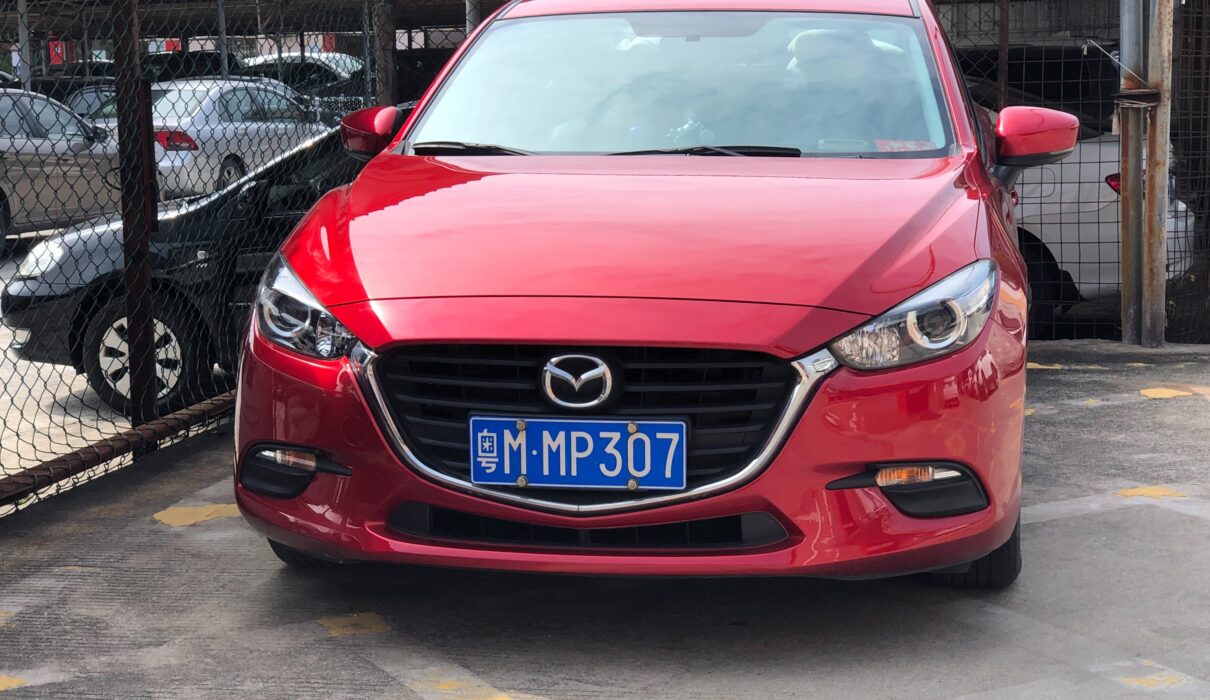
Mazda3 reliability by year is a story of two kinds of evidence pointing in opposite directions: the surveys say the 2016–2018 cars are the peak of the model, while the inspection data says those same years need the closest look.
Mazda3 Reliability by Year: The Shortlist
Scores are J.D. Power (via CarBuzz) unless marked. Complaint counts are CarComplaints reports, not failure rates.
| Year | Published record | Verdict |
|---|---|---|
| 2013 | 81/100; 39 complaints | Good |
| 2014 | 78/100; 66 complaints | Avoid |
| 2015 | 79/100; 34 complaints | Good |
| 2016 | 81/100; 21 complaints | Strong buy (rust check) |
| 2017 | 82/100; 16 complaints | Strong buy (rust check) |
| 2018 | 82/100; 15 complaints | Strong buy (rust check) |
| 2019 | 3/5 Consumer Reports; 21 complaints | Buy carefully |
| 2020 | 82/100; 3 complaints | Strong buy |
| 2021 | 4/5 Consumer Reports (predicted); 0 complaints | Strong buy |
| 2022 | 77/100; 2 complaints | Good so far |
| 2023 | 74/100; 2 complaints | Good so far |
| 2024 | 77/100; 0 complaints | Good so far |
| 2025 | No published score | Too new to score |
Best Mazda3 Years to Buy Used, by Budget
The consensus best years are 2016–2018 and 2020–2021 (CarsCounsel), which calls 2017 “widely considered the most reliable” Mazda3 year and its best overall pick, with 2013 the best budget option and 2020 the best modern alternative. REREV agrees.
On a tight budget, the 2016 is the cheapest entry point, averaging about $12,200 in Clutch’s Canadian used-price averages for April–June 2026 (Clutch). All three are bargains only with the rust check below. The Mazda3 also appears in our Best Used Cars to Buy guide.
For a newer car, Clutch’s sweet spot is 2021–2023, with 2023 the “cleanest Mazda3 year in our data”, and 2019–2020 as the redesign value pick (Clutch). The 2020 is the strongest single pick: 82/100 on J.D. Power with just three CarComplaints reports and a 5/5 Consumer Reports verdict (CarBuzz; MotorBiscuit).
Mazda3 Years That Need the Closest Inspection
The years to avoid outright are 2004, 2007, 2010 and 2014 (REREV). The 2004 launched the model with engine and transmission problems, and the 2007 carried three recalls, including a power-steering failure that led to a recall of about 215,000 cars (REREV). The 2014 is the first year of the third generation: 66 CarComplaints reports, the most of that generation, mostly premature brake wear and infotainment faults (CarBuzz). CarBuzz advises avoiding the 2014 “if you can help it”, while CarsCounsel rates 2014–2015 a good choice; the complaint record favours caution.
The 2019 needs care: it is the fourth-generation redesign year. Consumer Reports gave it 3/5 for reliability, down from 5/5 for 2014–2018, before recovering to 5/5 for 2020 (MotorBiscuit). CarsCounsel still lists 2019–2021 as a best late-generation choice, but this guide recommends 2020–2021. On 2010–2011, REREV names 2010 a worst year while CarsCounsel puts 2010–2011 as “approach carefully”; this guide treats 2010 as avoid and 2011 as inspect-carefully, on the clutch evidence below.
Reliability by Generation: 1st Through 4th
Four generations cover the used market. The first (2004–2009) is the rust and dashboard generation: melting dashboards, power-steering hose leaks and ABS failures (CarsCounsel). The second (2010–2013) kept the dashboard materials, and the 2012 refresh brought the Skyactiv engine (CarsCounsel). The third (2014–2018) is the turning point: Skyactiv became standard, build quality took a major step up, and the 2016 refresh fixed the infotainment quirks (CarsCounsel). The fourth (2019–present) pushed the car upmarket, added all-wheel drive and, from 2021, a turbocharged engine (CarsCounsel; Mazda). J.D. Power has no Mazda3 year below 74/100 in its records back to 2007 (CarBuzz) — the difference between generations is the body and the dashboard, not the engine.
Skyactiv Engines: What Changed in 2012, and What to Verify
Skyactiv engines arrived for 2012, and CarsCounsel says the change “vastly improved mechanical longevity”. The 2.0-litre Skyactiv-G makes 155 hp and 150 lb-ft; the 2.5-litre makes 184 hp and 185 lb-ft in the third generation and 186 hp in the fourth (MotorTrend; CarBuzz). From 2021, the turbocharged 2.5 makes 227 hp and 310 lb-ft on regular fuel, or 250 hp and 320 lb-ft on premium 93-octane (Mazda). Every Mazda3 uses a six-speed manual or automatic — there is no CVT anywhere in the range, one reason the transmission record is clean.
Two things to verify. First, a 2012–2013 car may still carry the older MZR engines rather than Skyactiv, so confirm which engine is fitted (CarsCounsel). Second, the 2012 has a transmission warning: REREV reports worn bearings and gears grinding from third to fourth. A 2012 is a good buy only with a clean shift test through every gear.
Rust, Dashboards, and Clutches — the Early Mazda3 Problems
Rust is the Mazda3-specific check. Clutch, from more than 2,700 inspections, says corrosion comes up in its Mazda3 notes more often than for any other model in its guide, concentrated on older cars — door hinges, lower door edges, the roofline, and stone-chipped panels; some arrived with rust that pushed them below its retail standard and were never listed (Clutch). The cutoff is the 2019 redesign, which brought better coatings: corrosion mentions “drop away sharply on 2019 and newer” (Clutch).
The dashboard is the other early-car defect: the material on 2004–2013 cars degrades in high heat, turns sticky and highly reflective, and the glare can blind the driver (CarsCounsel). Mazda issued a warranty extension program for affected vehicles — not a safety recall — so coverage depends on the VIN (CarsCounsel).
The clutch is the 2010–2011 story: REREV calls clutch failure the most frequent Mazda3 issue in those years, with owners replacing clutches early. CarBuzz counts 66 clutch-failure complaints for the 2010 alone, typically at about 39,250 miles, with an average repair cost of $1,270 (CarBuzz).
Infotainment, Electronics, and First-Year Redesign Quirks
The 2014–2015 cars carry the infotainment faults: some 2014 touchscreens bubbled or peeled, causing ghost touches or unresponsive inputs. REREV says the 2015’s only common complaint was the infotainment system dying, and the 2016 refresh resolved most of these quirks (CarsCounsel; REREV).
The fuel pump is the one to check by VIN. Mazda recalled about 121,000 vehicles in the United States under NHTSA campaign 21V-875 (November 2021) after Denso low-pressure fuel pumps with deformed impellers could fail and stall the engine; the 2018 Mazda3 was among the models covered (NHTSA). A 2025 class-action settlement then extended fuel-pump coverage to 2018–2021 Mazda3s for 15 years from first use (LegalClarity). The 2018 also carries four known recalls, the most common a rearview camera image that does not display properly (RepairPal).
What to Inspect on Any Used Mazda3 Before You Pay
Our Used Car Buying Guide covers the full checklist; for a Mazda3, add these:
- Run the VIN through NHTSA’s recall lookup — especially the fuel-pump coverage on 2018–2021 cars.
- Check the bottom edges of all four doors, the roof rails, and each door’s hinges — surface bubbling under paint is the warning sign (Clutch).
- Check the dashboard in sunlight for stickiness and glare on any 2004–2013 car.
- Test the touchscreen for peeling, ghost touches and dead zones on 2014–2016 cars.
- On a 2010–2011 manual, test the clutch for slip — clutch failure was the most frequent issue then (REREV).
- On a 2012, shift through every gear, including third to fourth, and listen for grinding (REREV).
- On a 2019, check the fuel-pump coverage on the VIN.
- On a 2016–2018, get the car on a lift: the underbody rust check is non-negotiable (Clutch).
- Get an independent pre-purchase inspection.
Mazda3 vs. Corolla vs. Civic: Driving Fun Against Running Costs
On RepairPal’s headline numbers the Mazda3 trails its rivals on cost but not by much: 4.0 out of 5.0, 9th of 36 compact cars, at $433 a year, against the Corolla at 4.5, 1st of 36, at $362 a year and the Civic at 4.5, 3rd of 36, at $368 a year (RepairPal; our Honda Civic Reliability by Year guide). The Mazda3 is also the cheapest to buy: Clutch’s Canadian averages show it undercutting a same-year Corolla by about $2,000 on the older years — $12,200 against $14,400 for a 2016 (Clutch).
On longevity the rivals split. The Civic leads the compact class: the average Civic reaches 183,603 miles, with a 15% chance of 250,000 miles, the highest of any compact car (iSeeCars, via RoadEthos, in our Civic guide); the Corolla sits at 5.4% (iSeeCars, via RoadEthos, in our Corolla guide). No Mazda3-specific iSeeCars figure is published; MotorBiscuit’s summary is that most Mazda3s are good for 150,000 miles or more.
Year selection matters more than brand, as our Civic guide puts it: a 2017 Mazda3 beats a 2016 Civic, and a 2021 Corolla beats a 2014 Mazda3. Buy the Mazda3 for the driving experience and the six-speed gearbox. Buy the Corolla for the cheapest ownership record and the Civic for the longest life. The Toyota RAV4 Reliability and Honda CR-V Reliability hubs show how the same method judges the SUV side.
Mazda3 Reliability Questions Buyers Ask Most
Which Mazda3 year is the most reliable overall?
The 2017 and 2018 tie at 82/100 on J.D. Power, with 16 and 15 CarComplaints reports respectively; CarsCounsel calls the 2017 the most reliable single year.
Is the 2010 Mazda3 really the most reliable year?
No — J.D. Power rates the 2010 at 83/100, the highest of any Mazda3 year, because its ratings measure how often issues occur, not how severe they are (CarBuzz). CarComplaints tells the other half: 196 reports, led by 66 clutch failures.
Does the Mazda3 rust more than a Civic or Corolla?
On inspection evidence, yes on older cars: corrosion comes up in Clutch’s Mazda3 notes more often than for any other model in its guide, concentrated before the 2019 redesign (Clutch).
Is a 2019 Mazda3 safe to buy now?
Buy carefully: Consumer Reports gave it 3/5, and it carries 21 CarComplaints reports against three for the 2020 (MotorBiscuit; CarBuzz). The 2020–2021 cars are the safer pick.
Should I buy the 2.5 turbo or the naturally aspirated 2.5?
The turbo makes 227 hp on regular fuel and 250 hp on premium, with all-wheel drive standard (Mazda). It is the quicker car; the naturally aspirated 2.5 is cheaper to buy and run.
Sources
- CarsCounsel: Best and Worst Mazda 3 Years
- REREV: Best and worst Mazda 3 years — which to avoid
- Clutch: Best Mazda3 Years to Buy Used (2,700+ Inspections)
- RepairPal: Mazda 3 Reliability Rating
- RepairPal: 2018 Mazda 3 Repair & Maintenance Costs
- MotorBiscuit: How Reliable Is the 2021 Mazda3? We Take a Look at the Data
- MotorBiscuit: The Best Years for Mazda3 Reliability
- CarBuzz: The 2010 Mazda3 Is The Best Model Year For Reliability
- Mazda USA: 2021 Mazda3 2.5 Turbo
- NHTSA: Recalls and complaints by model year; fuel-pump recall 21V-875
- LegalClarity: Mazda Fuel Pump Settlement
- J.D. Power: Mazda3 Quality & Reliability scores by year (via CarBuzz and MotorBiscuit)
Author: Marcus Reed — Reliability & Used Cars Writer, MY Car Reviews. Research-based. See Review & Testing Methodology and Editorial Policy. Internal links: Used Car Buying Guide, Best Used Cars to Buy, Toyota RAV4 Reliability, Honda CR-V Reliability, Honda Civic Reliability by Year.