 By
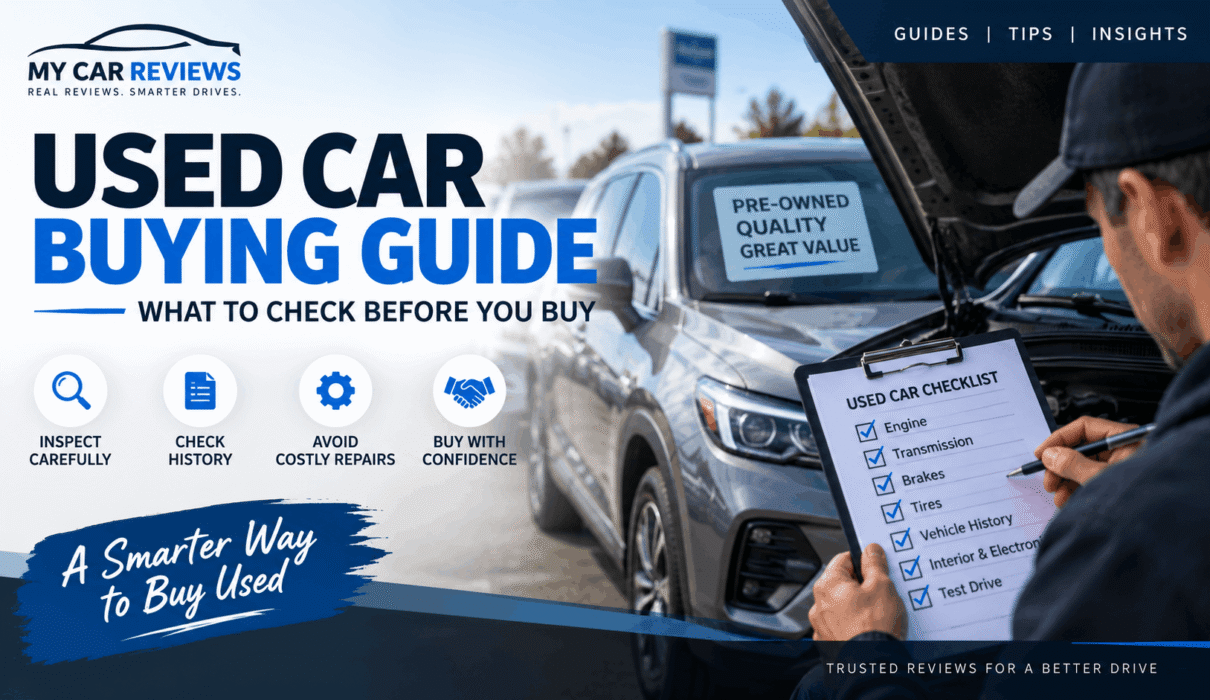
By Before buying a used car, check the vehicle history report, inspect the exterior and interior for damage, verify the service records, take it for a thorough test drive, and get a professional pre-purchase inspection. Doing all five, not just one or two, is what separates a confident used-car purchase from an expensive surprise a few months later. This guide walks through each step in order, from paperwork you can check before you ever see the car to the final negotiation once your inspection is done.
None of these steps require special tools or expertise. What they require is a methodical approach and the willingness to walk away if something doesn’t check out, which is often the single biggest advantage a prepared buyer has over an unprepared one.
What Should I Check Before Buying a Used Car?
Start with the paperwork before you ever see the car in person. Request the vehicle identification number (VIN) and pull a vehicle history report through a service like Carfax or AutoCheck. This reveals prior accidents, title issues (salvage, flood, or rebuilt titles), odometer discrepancies, and the number of previous owners, any one of which can be a dealbreaker on its own. If a seller is unwilling to share the VIN before a visit, treat that as a red flag.
Once you’re looking at the car, work through it in a fixed order: exterior, interior, engine bay, undercarriage, and finally a test drive. Skipping around tends to mean skipping something entirely, especially if you’re excited about the car.
The Exterior Inspection
- Walk the full perimeter and look for mismatched paint or uneven panel gaps, which often signal past collision repair.
- Check for rust around wheel arches, door sills, and the undercarriage, since corrosion is expensive to fix and hard to reverse.
- Look under trim and around the hood edges for sanding marks or overspray, another sign of prior bodywork.
- Inspect tire tread depth and wear pattern; uneven wear can point to alignment or suspension issues.
- Check all glass for chips or cracks, and confirm every light (headlights, taillights, turn signals) functions correctly.
The Interior Inspection
- Sit in every seat and check for excessive wear relative to the claimed mileage; heavily worn seats on a low-mileage car are a red flag.
- Test the air conditioning, heating, all windows, power locks, and the infotainment system.
- Check for unusual odors, especially musty or mildew smells that can indicate past water damage.
- Confirm the VIN on the dashboard and door jamb matches the paperwork exactly.
- Check the odometer reading against the service history for consistency.
The Engine Bay and Undercarriage
- With the engine off, check for leaking fluids underneath the car and around the engine.
- Inspect belts and hoses for cracking, fraying, or soft spots.
- Check fluid levels and color, since dark, gritty oil or discolored coolant both warrant follow-up questions.
- Look at the battery terminals for corrosion, which can affect starting and electrical systems.
- Inspect brake pads and rotors for thickness and uneven wear where visible.
What Mileage Is Too High?
There’s no single mileage that automatically disqualifies a used car. A well-maintained car with 150,000 miles can be a better buy than a neglected one with 60,000. That said, average annual mileage runs roughly 10,000 to 15,000 miles, so a car that’s several years old should track reasonably close to that pace; a large gap in either direction is worth investigating. Unusually low mileage on an older car can mean long periods of inactivity, which brings its own set of issues (dried-out seals, degraded fluids), while unusually high mileage relative to age warrants a closer look at how the car was used, such as commercial or fleet duty.
The more useful question than a hard mileage cutoff is whether the mileage is backed up by service records. A car with 180,000 documented, well-maintained miles is a more predictable purchase than a car with 80,000 miles and no service history at all, since the record, not the odometer alone, is what tells you how the car was actually treated.
The Test Drive
Drive the car under conditions similar to how you’ll actually use it: highway speed, stop-and-go traffic, and a few sharp turns at low speed to listen for suspension noise. Pay attention to whether the transmission shifts smoothly, whether the brakes pull to one side, and whether the steering wheel vibrates at speed. Turn off the radio for at least part of the drive so you can hear engine, exhaust, and wheel-bearing noise clearly. If anything feels off, even something minor, it’s worth mentioning during negotiation or having a mechanic specifically check.
Get a Professional Pre-Purchase Inspection
Even after a careful self-inspection, a paid pre-purchase inspection from an independent mechanic, typically $100 to $150, is worth it for any vehicle over roughly $5,000. A mechanic with the car on a lift can spot problems that are effectively invisible during a walkaround: worn suspension components, early-stage leaks, or frame damage from a prior accident that wasn’t disclosed. This is doubly important for private-party sales, where there’s no dealer inspection or warranty as a backstop.
If the inspection turns up issues, you have three reasonable paths: negotiate the price down to cover the expected repair cost, ask the seller to fix the issue before the sale, or walk away. All three are legitimate outcomes of a good inspection, and none of them are a wasted $100–$150 if they keep you from a much larger repair bill down the line.
Used vs. Certified Pre-Owned (CPO)
A certified pre-owned vehicle has been through a manufacturer- or dealer-run inspection process and comes with an extended warranty, typically at a price premium over a comparable non-certified used car. That premium buys peace of mind and warranty protection, which matters more for vehicles with a less certain reliability history or for buyers who prioritize predictable costs over the lowest possible purchase price. For a car that’s already well regarded for reliability, a thorough independent inspection plus a lower purchase price can be the better value; for anything with more ownership uncertainty, CPO coverage is easier to justify.
Private Seller vs. Dealership
Both are legitimate ways to buy a used car, and the inspection checklist above applies equally to either. Private sellers typically offer lower prices since there’s no dealer markup, but you lose any dealer-backed warranty or certification. Dealerships cost more on average but offer financing on-site, certified pre-owned options, and, depending on the dealer and state, a short return window that private sales don’t provide. If you’re buying from a private seller, meeting in a public, well-lit location and bringing someone with you are reasonable precautions on top of the mechanical checklist.
If the Vehicle History Report Shows an Accident
An accident on the history report isn’t automatically disqualifying. It depends on the severity and quality of the repair. Ask for documentation on what was repaired and by whom, and have a mechanic specifically check for structural or frame damage during the pre-purchase inspection. If the damage was extensive or the repair documentation is thin or missing, walking away is the safer choice, since hidden structural issues can affect both safety and long-term reliability in ways that are hard to catch after the fact.
For model-specific reliability data to narrow your shortlist before you start inspecting individual cars, see our Best Used Cars to Buy pillar guide. A deeper look at how age and mileage should be weighed against each other is in progress and will be linked here once published.
Frequently Asked Questions
What should I check before buying a used car?
Check the vehicle history report, inspect the exterior and interior for damage, verify service records, take a thorough test drive, and get a professional pre-purchase inspection before finalizing any purchase.
How do I inspect a used car?
Work through it in order: exterior body and tires, interior and electronics, engine bay and undercarriage, then a test drive covering highway and stop-and-go conditions. Follow up with a paid inspection from an independent mechanic.
What mileage is too high?
There’s no fixed cutoff. A well-maintained higher-mileage car is often a better buy than a neglected lower-mileage one. Compare the odometer reading against the car’s age and, most importantly, against its documented service history.
Sources
Yahoo Autos: The Complete Used Car Buying Checklist; CoverageX: Used Car Pre-Purchase Inspection Checklist; AutoFinder: What to Look for When Buying a Used Car; Decide Before Buying: Used Car Pre-Purchase Checklist.